Choosing among the top Travel Head Cutting Machine manufacturers requires more than comparing prices. Cutting accuracy, press force, energy use, service response, and operator protection directly affect production results. A machine should also match the material, die size, sheet thickness, and daily workload.
Market demand makes this decision increasingly important. Fortune Business Insights valued the global footwear market at approximately USD 454.7 billion in 2023. Its report projects continued growth through 2032. Grand View Research also identifies footwear and leather goods as major users of industrial cutting technologies. These figures do not measure Travel Head Cutting Machine sales directly. However, they show why manufacturers continue investing in faster and more consistent cutting equipment.
Real factories reveal the difference.
Manufacturing automation specialist Mikell P. Groover states, “Automation is the technology by which a process or procedure is accomplished without human assistance.” His observation helps explain the value of programmable travel-head systems, particularly when repeated cutting patterns demand stable pressure and positioning. Yet automation alone does not guarantee quality. Poor die alignment, weak after-sales support, or unclear safety documentation can create costly interruptions.
This guide compares leading Travel Head Cutting Machine manufacturers through practical criteria. It examines cutting precision, machine construction, customization, maintenance access, delivery capability, and compliance with recognized safety principles such as ISO 12100. Supplier reputation matters, but evidence matters more. Factory demonstrations, test-cut samples, warranty terms, and customer references should support every claim. Some published specifications remain difficult to compare. That is worth acknowledging. A careful buyer should verify performance under real materials, not trust impressive brochures alone.
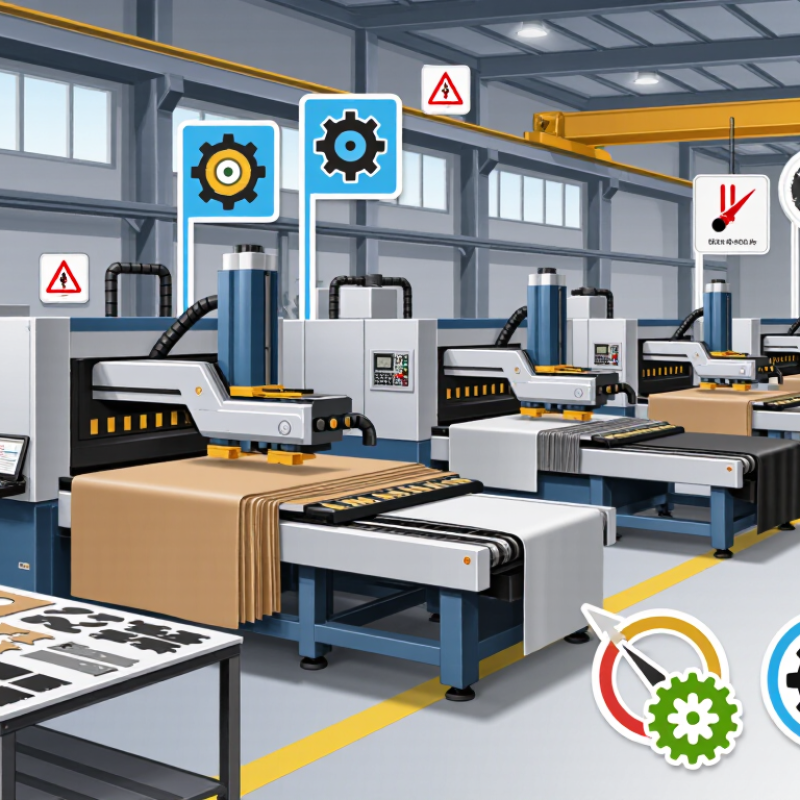
A travel head cutting machine is an industrial press that moves its cutting head across a material sheet. The head travels along rails, then applies controlled pressure through a cutting die. This movement allows one machine to cover a large working area. It can process leather, foam, textiles, rubber, insulation, and similar sheet materials.
In practical production, operators place the material on a cutting table and position the die carefully. The machine then presses downward with measured force. Hydraulic systems often provide strong, steady pressure, while servo-driven systems can improve positioning control. Travel speed, cutting force, table size, and head clearance affect daily output. A wider table is useful for large patterns, but it also requires more floor space.
Accuracy depends on more than the machine itself. Die sharpness, material thickness, alignment, and operator technique all matter. I have seen small positioning errors create visible waste across an entire batch. That lesson is easy to overlook. The machine is not a magic solution. Some layered materials compress unevenly, and very soft sheets may need trial cutting. Buyers should check safety guards, emergency controls, maintenance access, and training support before purchase. Noise, energy use, and replacement parts also deserve practical attention. A reliable trial with the actual material can reveal problems that a specification sheet cannot.
A travel head cutting machine uses a moving cutting head to apply vertical pressure through a die, making it suitable for flat materials such as leather, textiles, foam, rubber, felt, and gasket sheets. The chart shows representative cutting-force ranges commonly considered when selecting equipment; actual requirements depend on material density, thickness, die size, and layer count.
Higher-density materials and thicker or multilayer stacks generally require greater cutting force. Travel-head machines are selected by balancing force capacity, working area, head travel, and production speed.
Travel head cutting machines use a moving cutting head to process sheets of foam, leather, rubber, fabric, or composite material. The head travels across a fixed worktable, following digital coordinates from a CAD or nesting file. A cutting tool then applies controlled pressure through the material.
The machine usually combines a gantry, servo motors, a cutting die, and a vacuum table. The gantry controls horizontal movement with measured accuracy. The cutting head controls vertical force and cutting depth. Vacuum pressure keeps flexible materials stable during the cutting cycle. This reduces shifting, but it does not remove every risk.
Material testing matters.
An experienced operator checks thickness, density, grain direction, and surface tension before production. The correct tool depends on the material and required edge quality. A soft foam sheet may need a different stroke than a layered fabric panel. Sensors can monitor position and pressure, while software adjusts the tool path to reduce waste.
In practice, the first cut is rarely perfect. Small distortions may appear near corners or stacked layers. That detail is easy to miss. Reliable manufacturers support calibration, maintenance, operator training, and clear technical documentation. Buyers should inspect cutting accuracy, table size, service response, and spare-part availability. A fast machine is not always the best machine. Stable results, safe operation, and repeatable settings often matter more.
When comparing travel head cutting machine manufacturers, inspect the machine beyond its advertised tonnage. A reliable manufacturer should provide clear cutting-force data, head stroke, table dimensions, and material limits. Ask for test cuts using your actual foam, leather, rubber, or composite sheets. Look closely. The cut edge should remain clean, without crushing or uneven pressure near the corners.
Control quality also matters. Compare positioning accuracy, speed adjustment, emergency stopping, and operator access around the cutting area. A practical machine should support repeatable settings, especially when workers process different shapes throughout the day. Check whether the control panel is simple enough for training and detailed enough for experienced operators. Numbers matter, but usability often decides production results.
Review service records, spare-part availability, installation support, and maintenance instructions before choosing a supplier. A manufacturer with documented inspections and responsive technical assistance offers stronger reliability than one offering only a low purchase price. Ask how quickly they diagnose hydraulic leaks, sensor faults, or inconsistent pressure. I would not pretend every published specification reflects long-term factory performance. A demonstration may look excellent, yet daily noise, heat, and adjustment time can tell another story. Request references from comparable operations, then inspect the machine personally if possible.
Leading travel head cutting machine manufacturers serve luggage, footwear, leather goods, and technical textile producers. Their strongest machines combine programmable travel heads, stable cutting pressure, and precise material positioning. According to Textile Exchange’s Materials Market Report 2024, global fiber production reached 124 million tonnes in 2023. This volume increases pressure on factories to reduce waste and improve cutting consistency. Real experience matters more than impressive brochures.
Tips: Ask manufacturers for cutting samples using your actual leather, fabric, foam, or composite layers. Check edge quality, nesting accuracy, noise levels, maintenance access, and operator training. Also request verified cycle-time data, not optimistic showroom estimates. A short factory trial can reveal more than a long specification sheet.
The leading manufacturers usually provide servo-controlled movement, automatic height adjustment, safety sensors, and software for nesting optimization. The International Federation of Robotics reported 541,302 industrial robots installed worldwide in 2023, showing how automation is reshaping production expectations. However, travel head machines still need skilled setup. Poor blade selection can damage delicate surfaces or create uneven edges. ISO 9001 quality systems, documented spare-parts support, and regional technicians improve reliability. Buyers should compare total operating cost, including blades, energy, software updates, and downtime. Price alone is misleading. Some machines cut quickly but waste more material. My own evaluation would remain cautious without long-term maintenance records and customer references.
| Manufacturer Segment | Typical Machine Configuration | Typical Cutting Force | Common Working Area | Suitable Materials | Automation Level | Key Technical Strength | Typical Industries Served | Safety and Compliance Features | Best-Fit Buyer Profile |
|---|---|---|---|---|---|---|---|---|---|
| Premium European Manufacturers | Computer-controlled traveling-head hydraulic press with programmable cutting cycles | Approximately 20–150 metric tons | About 900 × 500 mm to 2,000 × 1,000 mm | Leather, footwear components, gaskets, insulation, synthetic fabrics, and technical textiles | High; CNC positioning, automatic height sensing, recipe storage, and production monitoring are commonly available | High repeatability, refined motion control, and strong process documentation | Automotive interiors, footwear, aerospace components, technical textiles, and premium leather goods | Two-hand controls, light curtains, guarded tooling zones, emergency stops, and CE-oriented safety designs | Manufacturers requiring consistent quality, traceability, and long-term production stability |
| Established Taiwanese Manufacturers | Hydraulic traveling-head press with manual, semi-automatic, or CNC-controlled head movement | Approximately 15–120 metric tons | About 800 × 450 mm to 1,600 × 800 mm | Leather, rubber sheet, EVA foam, footwear materials, plastics, and composites | Medium to high; programmable positioning and automatic cutting-height control are widely offered | Balanced combination of mechanical reliability, customization, and production efficiency | Footwear, luggage, sporting goods, seals, packaging, and industrial components | Interlocked guards, emergency-stop circuits, overload protection, and safety-control systems | Medium-sized factories seeking dependable equipment with flexible configuration options |
| Large Chinese Industrial Manufacturers | Hydraulic traveling-head cutting machine in standard, double-head, or multi-station layouts | Approximately 20–500 metric tons | About 1,000 × 500 mm to 2,500 × 1,300 mm | Foam, textiles, leather, rubber, cardboard, plastics, and multilayer materials | Basic to high; options may include PLC control, servo positioning, automatic feeding, and conveyor integration | Broad model selection, large-format capability, and competitive equipment pricing | Furniture, automotive trim, packaging, footwear, insulation, and general manufacturing | Safety light curtains, two-hand operation, hydraulic overload protection, and machine guarding | High-volume users comparing capacity, customization, and total acquisition cost |
| Specialized Footwear Equipment Manufacturers | Compact traveling-head press optimized for die cutting soles, uppers, insoles, and shoe components | Approximately 15–80 metric tons | About 600 × 350 mm to 1,300 × 650 mm | Leather, microfiber, rubber, EVA, PU, mesh, and laminated footwear materials | Medium; programmable cutting positions and quick die-change features are common | Fast cycle times, compact layouts, and tooling compatibility for footwear production | Footwear, sandals, sports shoes, safety shoes, and orthopedic products | Guarded cutting zones, two-hand controls, emergency stops, and pressure-limit protection | Factories producing repeated shapes with frequent style changes and moderate batch sizes |
| Foam and Technical-Material Specialists | High-clearance traveling-head press with reinforced frame and optional material-feeding system | Approximately 30–300 metric tons | About 1,200 × 600 mm to 2,400 × 1,200 mm | PU foam, EVA, PE foam, rubber, felt, insulation boards, and multilayer laminates | Medium to high; automatic feeding, nesting support, and programmable stroke control may be included | Stable cutting of thick, resilient, or multilayer sheet materials | Packaging, acoustics, insulation, filtration, automotive components, and sports equipment | Overload control, guarded access, safety relays, emergency stops, and controlled descent systems | Producers processing thick sheets, large blanks, or technical materials at regular volume |
| Custom Automation Integrators | Engineered traveling-head system integrated with conveyors, robotic loading, vision inspection, or MES connectivity | Approximately 20–250 metric tons, depending on the application | Configured to order; commonly 1,000 × 500 mm to 2,000 × 1,000 mm | Material-specific; commonly textiles, leather, foam, rubber, composites, and laminated products | Very high; robotic handling, barcode tracking, automatic nesting, and production data collection may be integrated | Process integration and reduced manual handling across multiple production stages | Automotive, medical products, aerospace interiors, advanced textiles, and high-volume consumer goods | Risk assessment, safety PLCs, access guarding, light curtains, lockout provisions, and validated safety circuits | Large manufacturers prioritizing labor reduction, traceability, and automated material flow |
| Compact and Entry-Level Manufacturers | Single-column or compact traveling-head hydraulic cutting press with manual material positioning | Approximately 8–50 metric tons | About 400 × 300 mm to 1,000 × 500 mm | Leather, fabric, felt, thin foam, gaskets, paperboard, and light rubber sheet | Basic to medium; manual positioning with optional digital stroke or pressure controls | Low footprint, straightforward operation, and lower initial investment | Small footwear workshops, craft production, prototyping, upholstery, and maintenance operations | Emergency stops, two-hand controls, pressure limiting, and basic guarded operating areas | Small businesses, laboratories, and users with lower output requirements or limited floor space |
| Heavy-Duty Custom Press Manufacturers | Reinforced traveling-head hydraulic press with extended stroke, large table, and application-specific tooling | Approximately 100–1,000 metric tons | About 1,500 × 800 mm to 3,000 × 1,500 mm | Dense rubber, composite laminates, thick insulation, industrial felt, and heavy multilayer materials | Medium to high; PLC control, servo travel, automated loading, and multi-step recipes may be available | High-force cutting, large-format processing, and customized tooling arrangements | Industrial filtration, transportation, construction materials, heavy equipment, and composite manufacturing | Engineered guarding, hydraulic safety valves, pressure monitoring, safety PLCs, and access interlocks | Industrial plants requiring high tonnage, large work areas, and application-specific engineering |
Choosing among top travel head cutting machine manufacturers requires more than comparing prices. The right supplier should understand your materials, production volume, and workplace conditions. Ask about cutting accuracy, maximum travel distance, blade compatibility, and table capacity. These details affect daily output.
During factory evaluations, request a live cutting demonstration with material similar to yours. Watch the machine start, stop, and complete angled cuts. Excessive vibration can reveal weak construction. Review motor specifications, control systems, safety features, and maintenance access. A reliable manufacturer should provide clear drawings, installation guidance, training, and responsive technical support. Ask for documented testing procedures and realistic delivery schedules.
Do not trust impressive claims alone. Speak with several existing customers about downtime, spare-part availability, and service response. I once focused too heavily on the purchase price. That shortcut proved costly when maintenance became difficult. A cheaper machine may require more frequent calibration or longer operator training. Check warranty terms carefully, including travel costs for on-site service. Also confirm whether the manufacturer can adapt software, fixtures, or cutting parameters as your work changes.
Small details matter. Can operators clean the rails easily? Are replacement components standardized? Does the supplier explain limitations honestly? Manufacturers with practical engineering experience usually discuss these points without exaggeration. However, no supplier is perfect, and your own process may change after installation. Leave room for testing, feedback, and adjustment before approving the final configuration.