Leave Your Message

How to Choose a Hot Melt Coating Machine?

Choosing a Hot Melt Coating Machine requires more than comparing purchase prices. The right system must match the adhesive, substrate, coating width, production speed, and required coat weight. A packaging line may run at 80 meters per minute, while a medical or industrial process may demand tighter coating accuracy. Small details matter.

Industry data supports careful equipment selection. Grand View Research reports continued growth in the global hot melt adhesives market, driven by packaging, transportation, construction, and hygiene applications. MarketsandMarkets also identifies automation, low-emission materials, and improved bonding performance as important market trends. These findings suggest stronger demand for stable, efficient coating systems. However, adhesive market growth does not automatically guarantee a machine’s suitability.

A practical evaluation should examine slot-die or roller coating technology, temperature control, pump stability, web tension, and cleaning access. Smithers’ flexible packaging studies emphasize lightweight structures, material efficiency, and higher process consistency. Those requirements directly affect machine configuration. For example, a narrow coating gap may improve weight control, but it can increase sensitivity to viscosity changes. That risk is easy to underestimate.

Manufacturers should request coating trials using their actual adhesive and film. Measure coat-weight variation, startup waste, energy use, and downtime. A cheaper machine can look attractive. That judgment can fail. Operators also need clear maintenance procedures and accessible technical support. No report replaces production evidence. The best decision combines published market research, supplier experience, verified test results, and a realistic view of daily operating conditions. Reliability is built on measured performance, not impressive brochures.

How to Choose a Hot Melt Coating Machine?

What Is a Hot Melt Coating Machine?

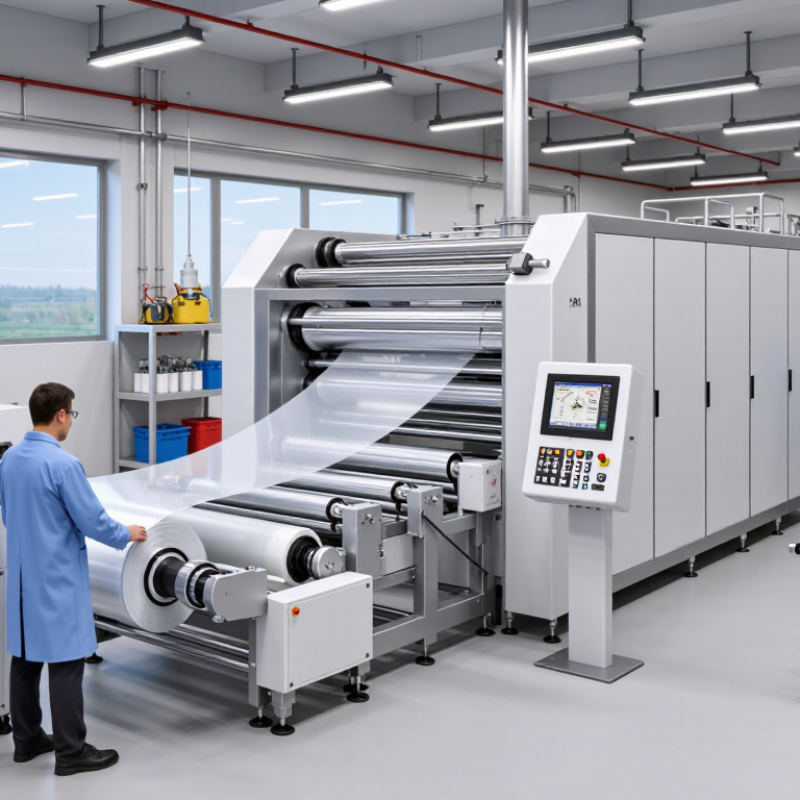
A hot melt coating machine melts solid adhesive pellets, meters the liquid, and applies a controlled layer to a moving substrate. It commonly uses a heated tank, precision pump, slot die, and cooling section. The substrate may be film, paper, foil, fabric, or foam. Unlike solvent-based equipment, it does not require solvent evaporation. That can simplify drying space and reduce volatile emissions, but thermal control becomes critical.

In production, coat weight depends on pump accuracy, web speed, adhesive viscosity, and die gap. A 0.5-millimeter setting can change the finished layer noticeably. Operators should check temperature uniformity across the die, not only the controller display. MarketsandMarkets estimated the hot melt adhesives market at about USD 10 billion in 2024, with projected growth toward USD 13.1 billion by 2029. Report definitions vary, so this figure should guide planning, not replace testing.

When choosing a machine, match its width and output to your real production range. Oversizing can waste energy and make low-speed coating unstable. Ask for trial data using your actual adhesive and substrate. Check temperature limits, cleaning access, pump response, emergency protection, and coating accuracy. A machine that runs fast during a demonstration may perform poorly after eight hours of continuous heating. This is often overlooked. Experienced technicians also inspect edge control, web tension, and filter maintenance before approving a purchase.

How to Choose a Hot Melt Coating Machine?

What Is a Hot Melt Coating Machine?

A hot melt coating machine melts a solid adhesive, controls its temperature and viscosity, and applies a uniform layer to a moving web, film, foil, paper, textile, or other substrate. The adhesive chemistry and required coating temperature are key factors when selecting the heating system, pump, hose, and coating head.

How to use this chart: The ranges show representative application temperatures commonly used for major hot melt adhesive chemistries. Choose a machine with sufficient heating capacity, accurate temperature control, compatible fluid paths, and a coating head designed for the adhesive viscosity and required coating weight. Actual settings must be confirmed with the adhesive technical data sheet and production trials.

How Does a Hot Melt Coating Machine Work?

A hot melt coating machine applies adhesive without using water or solvent. Solid adhesive pellets or blocks enter a heated reservoir. Electric heaters raise the material to a controlled melting range. Agitators can keep the melt uniform, while filters catch unwanted particles. A pump then moves the adhesive through a heated hose. The hose must stay warm. Otherwise, the adhesive may thicken or block the line. At the coating head, a slot die or roller spreads a measured film across the moving substrate. Paper, film, foil, foam, and fabric may require different settings.

The substrate travels over support rollers at a controlled speed. A nip roller can press layers together during laminating work. Cooling rollers reduce adhesive temperature and help stabilize the bond. Sensors monitor coating weight, web tension, temperature, and line speed. Operators adjust these values together, not separately. A faster web can create a thinner coat. Excessive heat may damage sensitive film or produce uneven edges.

In practical trials, the first setting is rarely perfect. That is normal. Record small changes and inspect the coating under steady light. Look for streaks, pinholes, wrinkles, and weak edges.

Cleaning matters too. Dried residue around the die can change the gap and distort the film. Before choosing a machine, check its coating range, heating accuracy, pump control, and cleaning access. Field testing often shows that simple calibration records reveal problems earlier than visual inspection alone.

What Coating Materials and Applications Should You Consider?

How to Choose a Hot Melt Coating Machine?

What Coating Materials and Applications Should You Consider?

Material choice should lead the machine decision. Ethylene-vinyl acetate (EVA) suits packaging, labels, and general laminating. Polyolefin hot melts offer stronger moisture and chemical resistance. Polyurethane reactive (PUR) systems can provide durable bonds on furniture panels, textiles, and technical films. Pressure-sensitive hot melts work well for tapes and self-adhesive labels. They need accurate temperature control and stable coating weight.

Industry data supports this broad demand. Grand View Research estimated the global hot melt adhesives market at about USD 9.35 billion in 2023. Its forecast suggests a compound annual growth rate near 6.5% from 2024 to 2030. Smithers also identifies packaging, hygiene products, and nonwovens as important growth applications. These figures are useful, but forecasts differ between reports. Treat them as direction, not certainty.

Match the machine to the real production scene. A slot-die coater can deliver a clean, uniform layer on films and foils. A roll coater may handle heavier adhesive deposits on boards or fabrics. For hygiene products, check high-speed web handling, low add-on accuracy, and quick maintenance access. For PUR, confirm sealed melting and moisture control. Do not choose only by maximum speed. A machine running fast with uneven edges wastes material. I have seen specifications look excellent on paper, yet the coating failed after substrate changes. Test the actual adhesive, width, temperature, and line speed before purchase. That step is imperfect, but it exposes hidden risks.

Which Machine Specifications and Features Matter Most?

Choosing a hot melt coating machine starts with the adhesive, not the sales brochure. In production trials, I check viscosity, coating width, and target application weight. A unit designed for narrow labels may struggle with a 1,600-millimeter web. That mismatch becomes expensive quickly. Ask for stable temperature control across the tank, hose, and die. Even a small cold spot can create streaks, gels, or uneven bonding. PID control is useful, but sensor placement matters more than the screen display.

Line speed should match the substrate and adhesive. Look for a practical range, not only the maximum speed. At low speed, the machine should prevent dripping and edge buildup. At high speed, the pump must maintain steady pressure without pulsing. An adjustable gear pump can help, while a precise slot die supports cleaner edges. Check die-lip adjustment, filter access, and cleaning time. These details decide whether a shift ends smoothly.

Safety and maintenance features deserve equal attention. Insulated surfaces, guarded moving parts, pressure relief, alarms, and clear emergency stops reduce daily risks. Ask how long a normal changeover takes. I prefer tool-free access where possible. Remote diagnostics can help, but operators still need readable local controls. During one trial, I trusted a displayed temperature too quickly. The adhesive was not fully melted near the outlet. That mistake changed my checklist. Request sample-coated rolls, inspect coat weight across the web, and test adhesion after cooling and aging. Do not judge the machine from one perfect run.

How to Choose a Hot Melt Coating Machine? - Which Machine Specifications and Features Matter Most?

Specification or Feature Typical Selection Range Why It Matters Recommended Selection Criteria Practical Check Before Purchase
Coating Width 300–2,000 mm for many industrial applications Determines the maximum usable web width and affects productivity. Confirm the effective coating width, edge allowance, and whether width changes require component replacement.
Coating Speed Approximately 10–100 m/min, depending on adhesive, substrate, and coating weight Higher speed can increase output, but may reduce coating stability if heating, metering, or web handling is inadequate. Ask for test results using the actual adhesive, substrate, coating weight, and line tension.
Coating Weight Range About 10–300 g/m², depending on the coating head and adhesive Controls bond strength, product performance, material consumption, and cost. Review coating uniformity across the web and along the machine direction at the intended speed.
Adhesive Compatibility Commonly hot melt pressure-sensitive, EVA, polyolefin, and some reactive hot melt formulations Different adhesives have different melting temperatures, viscosities, residence-time limits, and moisture sensitivities. Verify the adhesive technical data sheet, recommended processing temperature, viscosity, and cleaning procedure.
Temperature Control Independent control commonly provided for tank, hose, pump, and coating head Stable temperature is essential for consistent viscosity and coating quality. Check temperature accuracy, heating uniformity, alarm functions, and recovery time after material loading.
Melting Capacity Often approximately 5–100 kg/h, depending on system size Insufficient melting capacity can limit line speed and cause temperature or viscosity fluctuations. Compare the required adhesive consumption with the rated continuous melting output, not only the peak value.
Pump and Metering System Gear, piston, or other positive-displacement systems may be used The pump affects flow stability, coating-weight accuracy, and response to speed changes. Confirm flow-control accuracy, pressure monitoring, changeover behavior, and spare-part availability.
Coating Head Type Slot-die, roll, spray, or other application technologies The coating head determines achievable coating patterns, weight range, edge quality, and substrate compatibility. Inspect adjustment methods, lip or nozzle maintenance requirements, and the achievable coating tolerance.
Coating Accuracy Actual performance varies; many precision systems target low single-digit percentage variation Uniform coating is critical for adhesive performance, appearance, and material efficiency. Request cross-web and machine-direction test data at minimum, nominal, and maximum target coating weights.
Substrate Handling Paper, film, foil, nonwoven, fabric, foam, and laminate structures may require different handling settings Web tension, alignment, surface energy, and substrate stretchability influence coating quality. Test the thinnest, widest, most stretchable, and most sensitive substrate used in production.
Line Tension Control Application-dependent; low and stable tension is often important for thin or stretchable webs Unstable tension can cause wrinkles, tracking errors, coating streaks, and dimensional variation. Check tension stability during acceleration, deceleration, splice passage, and roll-diameter changes.
Machine Controls PLC and touchscreen control are common on modern industrial systems Controls affect repeatability, setup time, troubleshooting, and operator safety. Confirm whether the interface records production parameters and supports data export or remote diagnostics.
Heating and Insulation Heated tank, hoses, pump block, valves, and coating head are commonly required Heat loss can increase energy use and create cold spots, blockages, or unstable flow. Check external surface temperatures, insulation quality, warm-up time, and safe access around hot components.
Cleaning and Changeover Manual, assisted, or automated procedures depending on machine design Efficient cleaning reduces downtime and helps prevent contamination or degraded adhesive. Measure the actual changeover time and confirm the tools, flushing material, and waste-handling method required.
Safety Features Emergency stops, guards, hot-surface protection, pressure relief, and over-temperature alarms Hot melt systems combine high temperatures, moving webs, pressurized material, and electrical equipment. Verify guarding, emergency-stop locations, lockout procedures, alarm response, and operator training materials.
Energy Consumption Varies with installed heating power, adhesive throughput, insulation, and operating conditions Energy use affects operating cost and may influence factory utility requirements. Request electrical load data, warm-up requirements, standby consumption, and recommended utility capacity.
Installation Requirements May include electrical supply, compressed air, exhaust, floor space, and material-handling access Insufficient utilities or unsuitable layout can delay commissioning and limit performance. Review an approved layout drawing and utility checklist before preparing the installation area.
Maintenance and Serviceability Routine inspection of filters, seals, hoses, sensors, pumps, and coating-head components Maintenance access directly affects uptime and long-term operating cost. Ask for the preventive-maintenance schedule, critical spare-parts list, and recommended service tools.
Expansion Capability Optional additional coating heads, inspection systems, unwinds, rewinds, or automation modules Future production requirements may change the required width, speed, or coating pattern. Confirm which upgrades can be added later and which must be specified at the initial purchase.
Total Cost of Ownership Includes purchase price, adhesive waste, energy, labor, maintenance, downtime, and spare parts The lowest initial price does not always produce the lowest long-term cost. Prepare a five-year cost model and include commissioning, training, consumables, and expected maintenance.

How Can You Evaluate Safety, Maintenance, and Total Cost?

How to Choose a Hot Melt Coating Machine?

Safety should be checked on the factory floor, not only in a brochure. Look for guarded heated surfaces, stable temperature controls, emergency stops, and clear access points. Operators should reach routine controls without leaning over hot adhesive. A visible pressure gauge helps detect abnormal conditions early. Ask whether the machine supports safe cleaning procedures and practical operator training. Small design details matter.

Maintenance affects production more than many buyers expect. Inspect the coating head, hoses, filters, pumps, and temperature sensors before purchase. Parts should be reachable without removing half the machine. Confirm the recommended service intervals and the availability of technical support. Keep records of nozzle cleaning, calibration, and unplanned stops. That sounds simple. It is often neglected.

Total cost includes more than the purchase price. Estimate electricity use, adhesive waste, replacement parts, labor, training, and lost production during maintenance. Compare coating accuracy, warm-up time, and changeover speed under real operating conditions. A cheaper machine may consume more adhesive through uneven coating. It may also require longer shutdowns. I would not rely on optimistic supplier estimates alone. Request test data using your material, coating width, and target speed. Then review the results with operators and maintenance staff. Their criticism may expose costs that spreadsheets miss.