
Leave Your Message
Choosing the China Best Impregnation Machine for UD Fabric requires more than comparing prices or catalog photographs. A reliable supplier should demonstrate practical experience with unidirectional carbon, glass, or aramid fabrics. The right Impregnation Machine For Ud Fabric must control resin distribution, fabric tension, heating temperature, and production speed with consistent accuracy. These details directly affect fiber alignment, surface quality, and final laminate performance.
A professional evaluation should include factory records, technical drawings, material trials, and customer references. Ask suppliers to process your actual fabric width, resin system, and target areal weight. Watch how the fabric enters the impregnation zone. Does it wrinkle? Does resin reach the fiber bundle evenly? Small defects may become serious during curing. Check whether the supplier provides installation support, operator training, spare parts, and documented maintenance procedures. These services often reveal the real value behind the equipment.
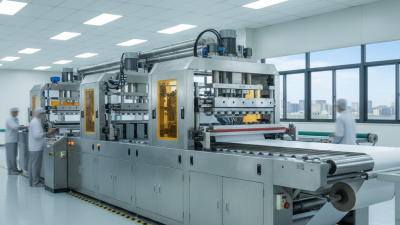
No machine is perfect. Published capacity may differ from stable daily output. A supplier may also present laboratory results that do not represent continuous production. That deserves careful questioning. Independent inspections and sample testing can reduce uncertainty. Buyers should compare tension-control performance, heating uniformity, cleaning access, safety systems, and long-term operating costs. Experienced engineers should review these findings before signing a contract. The best choice is not always the fastest line or the lowest quotation. It is the machine that fits your materials, workforce, quality targets, and future production plans. Keep asking questions. That is where reliable decisions begin.
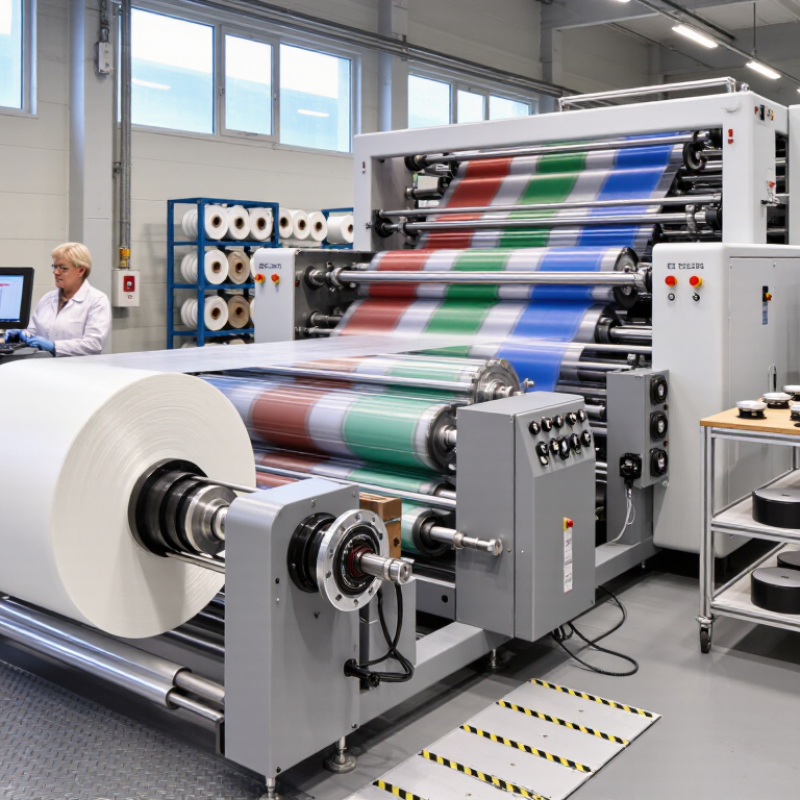
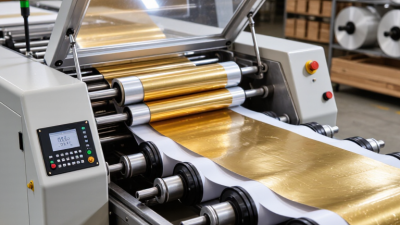
A UD fabric impregnation machine aligns continuous fibers in one direction and saturates them with resin. “UD” means unidirectional, unlike woven fabric, where yarns cross at right angles. The line usually includes a creel, tension-control unit, resin bath or film applicator, heated rollers, calendering rollers, and a winding system. Each section affects fiber straightness, resin distribution, and final laminate quality.
The process is precise. Fibers enter under controlled tension, pass through resin, and leave as a flat tape or fabric. Typical composite designs target a fiber volume fraction near 50–65%, although the correct value depends on resin, fiber type, and application. Excess resin adds weight. Too little resin creates dry spots. Small defects matter. MarketsandMarkets reported that the global composites market could grow from about USD 105 billion in 2023 to USD 151 billion by 2028. This growth increases demand for repeatable impregnation equipment.
A reliable machine should record line speed, roller pressure, heating temperature, and resin content. Operators should also inspect width, tack, voids, and winding tension. Numbers alone are not enough. A recent trial may pass inspection yet fail after storage or lamination. That is an uncomfortable limitation. Machine selection should therefore include sample testing, process documentation, and independent quality verification. Lower energy use and stable temperature control also deserve attention, especially as manufacturers pursue lighter and more efficient composite structures.
| Data Dimension | Typical Technical Data | Unit | Why It Matters |
|---|---|---|---|
| Machine function | Continuous impregnation of unidirectional yarn or fabric with a thermoset or thermoplastic resin | — | Creates consistent resin distribution and prepares UD reinforcement for downstream lamination or consolidation. |
| Compatible reinforcement | Carbon fiber, glass fiber, aramid fiber, and selected natural-fiber yarns or fabrics | — | Material compatibility affects wet-out quality, line tension, abrasion, and final composite performance. |
| Typical working width | 300–2,500 | mm | The usable width should match the required UD tape, sheet, or fabric width with allowance for edge trimming. |
| Typical production speed | 5–30 | m/min | Actual speed depends on resin viscosity, fiber architecture, target resin content, heating, and curing requirements. |
| Resin systems | Epoxy, polyurethane, vinyl ester, polyester, polypropylene, and other qualified matrix systems | — | The resin system determines tank design, heating method, cleaning procedure, and consolidation temperature. |
| Target resin content | 20–45 | % by mass | The required resin fraction should be validated through sampling and testing for each fiber and resin combination. |
| Resin viscosity operating window | Approximately 100–5,000 | mPa·s | Lower viscosity generally improves fiber wet-out, while the practical range depends on temperature and impregnation pressure. |
| Heating temperature range | Ambient to 250 | °C | Temperature control reduces viscosity and supports melting or partial curing of the selected matrix system. |
| Resin application method | Resin bath, metering roll, kiss roll, slot die, or pressure-assisted impregnation | — | The application method influences resin uniformity, fiber alignment, line speed, and material waste. |
| Tension control | Closed-loop dancer or load-cell control; commonly adjustable from low to moderate tension | N | Stable tension helps prevent wrinkles, spreading variation, fiber waviness, and edge distortion. |
| Consolidation pressure | Adjustable nip-roll or calender pressure | kN or MPa | Controlled pressure removes entrapped air and helps achieve the specified thickness and resin distribution. |
| Thickness control | Online gap adjustment with manual or automatic thickness monitoring | mm | Consistent thickness is important for automated lay-up, laminate design, and part dimensional accuracy. |
| Cooling section | Air cooling, chilled-roll cooling, water cooling, or combined cooling | — | Cooling stabilizes the impregnated UD material before winding, cutting, or protective-film application. |
| Line control system | PLC, variable-frequency drives, temperature controllers, and operator touch screen | — | Integrated control improves repeatability and allows operators to record key process parameters. |
| Quality indicators | Areal weight, resin content, thickness, width, fiber alignment, surface appearance, and tensile properties | — | These measurements verify whether the impregnated UD fabric meets the specified production standard. |
| Typical downstream formats | Rolls, sheets, slit tapes, prepreg layers, or protective-film laminated UD material | — | The required output format determines the winding, slitting, cutting, and release-film configuration. |
| Supplier evaluation criteria | Pilot trials, material compatibility, process stability, safety design, spare-parts support, documentation, and operator training | — | A machine should be selected by verified trial results and lifecycle support rather than by nominal speed alone. |



 Wechat: ANNIELV88