
Leave Your Message
Why Choose a Manual Cutting Machine for Your Business?
Manufacturers are investing heavily in automation, but automation is not always the best first step. The International Federation of Robotics reported 541,302 industrial robots were installed worldwide in 2023. That figure shows strong technological momentum. It does not mean every workshop needs a robotic cutting line.
A Manual Cutting Machine can suit businesses with small batches, changing materials, and limited floor space. It usually requires lower upfront investment and less technical training. An operator can place fabric, paper, leather, foam, or thin sheet material directly under the blade. The result is immediate feedback: a clean edge, visible alignment, and quick adjustment. That practical control matters when customers request different sizes every day.
Deloitte’s 2024 Smart Manufacturing and Operations Survey found that 86% of manufacturing leaders expect smart manufacturing to support competitiveness within five years. Yet competitiveness also depends on cash flow, maintenance, and workforce capability. A manual machine may reduce software dependency and simplify daily servicing. It may also create slower output and greater variation between operators. That weakness should not be ignored.
The best choice depends on evidence, not fashion. Businesses should compare order volume, material thickness, repeatability, labor cost, and safety requirements. ISO 12100 provides a recognized framework for machinery risk assessment. Proper guards, training, and maintenance remain essential. A manual process is not automatically safer.
Sometimes, simple wins.
This guide examines where a Manual Cutting Machine creates measurable value, where it falls short, and when upgrading becomes sensible. The answer may change as orders grow. That is worth planning for.
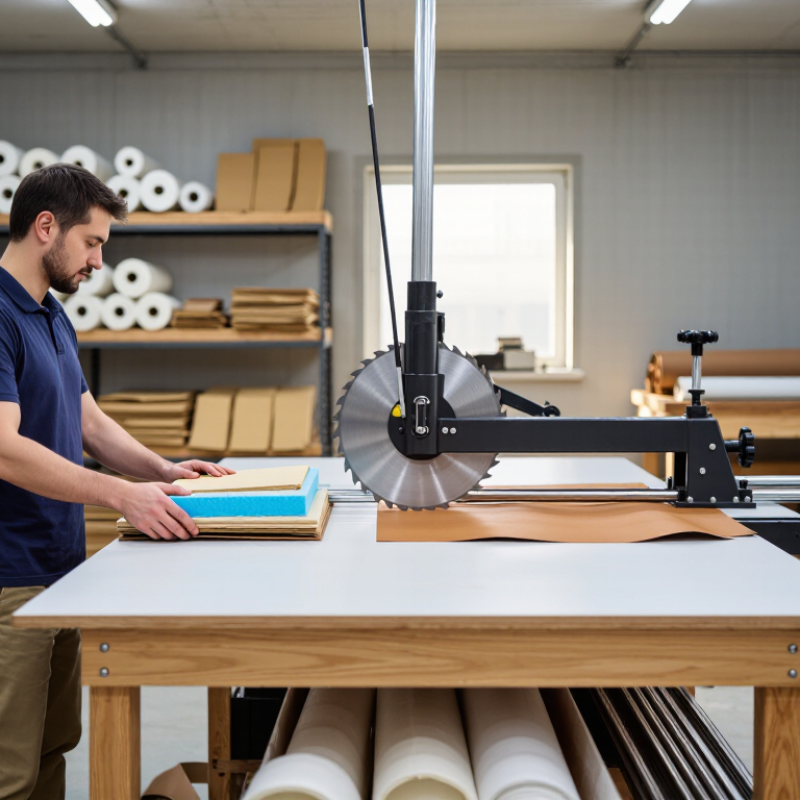
A manual cutting machine is a mechanical tool that cuts sheet material without an electric motor. The operator places paper, cardboard, leather, foam, or thin plastic beneath a sharp die or blade. A lever, handle, or flywheel then creates downward pressure. The cutting edge follows a fixed shape, producing repeatable pieces with limited setup time. It is simple, but not effortless.
In daily production, the operator aligns the material, lowers the cutting head, releases the pressure, and removes the finished piece. A firm worktable and clear measurement marks help reduce waste. The result depends heavily on blade sharpness, material thickness, and human alignment. That is where the machine’s weakness appears. Small errors can multiply across a batch.
The market context is practical. Smithers’ The Future of Global Packaging to 2028 forecasts global packaging demand above 1.2 trillion dollars by 2028, increasing pressure for efficient converting processes. PMMI’s 2024 State of the Industry report also identifies labor availability and equipment uptime as major packaging concerns. A manual cutter can suit short runs, sampling, maintenance work, and businesses testing a product before automation. It usually costs less to install and can be understood quickly by trained staff. However, production speed varies between operators. Real workshop experience often reveals this gap. Manual does not mean careless. It means every stroke still deserves attention.
| Data Dimension | Typical Information | Why It Matters for a Business |
|---|---|---|
| Definition | A manual cutting machine is a hand-operated tool that uses a blade, die, or cutting wheel to divide sheet, roll, or flat materials. | It provides a straightforward cutting solution without requiring electrical power or automated controls. |
| Operating Principle | The operator positions the material, aligns it with a guide, and applies mechanical force through a lever, handle, or sliding carriage. | The simple mechanism is easy to understand, troubleshoot, and operate after basic training. |
| Common Materials | Depending on the machine type, suitable materials may include paper, cardboard, fabric, vinyl, leather, plastic sheet, foam board, thin rubber, and some soft metals. | Material compatibility helps a company select one tool for several low-volume cutting tasks. |
| Typical Cutting Width | Common manual models are available with working widths ranging from approximately 300 mm to 1,600 mm, depending on design and application. | The required width should match the largest material size normally processed. |
| Cutting Thickness | Capacity varies by blade, material, and machine structure; many light-duty models handle thin sheets or stacks, while heavy-duty models handle thicker materials. | Checking the manufacturer’s rated capacity prevents poor cut quality and premature blade wear. |
| Cutting Accuracy | Accuracy depends on the guide system, blade condition, material stability, and operator technique. A rigid guide and a sharp blade generally improve repeatability. | Manual cutting is suitable for prototypes, custom orders, samples, and short production runs where flexibility is more important than high-speed automation. |
| Production Speed | Output is determined by material loading, cutting length, required force, repositioning time, and operator skill. It is normally slower than powered or automated equipment. | It is a practical choice when order volume is moderate or when frequent size changes make automation inefficient. |
| Power Requirement | Manual machines generally operate without electricity, compressed air, or software. | They can reduce energy use and remain useful in workshops or locations with limited power access. |
| Initial Investment | Manual equipment usually has a lower purchase cost than powered, computer-controlled, or fully automated cutting systems. | A lower entry cost can help small businesses add cutting capability without a large capital commitment. |
| Installation | Most manual machines require a stable, level work surface and sufficient clearance for loading and handling material. | Simple installation can shorten setup time and reduce facility modification costs. |
| Maintenance Needs | Routine care typically includes cleaning, checking fasteners and guards, lubricating moving parts when specified, and replacing or sharpening worn blades. | Fewer mechanical and electronic components can simplify maintenance and reduce downtime. |
| Operator Skill | Basic operation can be learned quickly, but safe handling, accurate alignment, and consistent pressure require proper instruction. | Training improves productivity, cut consistency, and workplace safety. |
| Safety Features | Important features may include blade guards, safety latches, hold-down devices, non-slip bases, and clearly marked cutting zones. | Safety features help reduce the risk of contact injuries, shifting materials, and accidental operation. |
| Best-Fit Applications | Custom packaging, signage preparation, upholstery, crafts, sample making, repair work, educational workshops, and small-batch manufacturing. | These applications benefit from quick adjustments, low setup requirements, and control over individual cuts. |
| Main Limitation | Manual operation can require more labor and may deliver lower throughput than powered or automated cutting systems for large, repetitive orders. | Businesses with continuous high-volume production should compare labor costs and output requirements before choosing manual equipment. |


 Wechat: ANNIELV88