What Is a Swing Arm Cutting Machine and How Does It Work?
A Swing Arm Cutting Machine is a precision press used to cut shaped parts from sheet materials. It is common in footwear, leather goods, packaging, upholstery, and light industrial production. The machine uses a hinged cutting head that moves across a working table. This design gives operators a clear view of the cutting area.
The process is straightforward. An operator places material on the table and positions a sharp cutting die above it. When activated, the swing arm lowers with controlled force. The die presses through leather, foam, rubber, felt, or similar materials. Pressure then releases, and the arm returns to its raised position. Some models use hydraulic systems, while others use pneumatic or mechanical power. The actual result depends on die sharpness, material thickness, pressure settings, and careful alignment.
Small details matter. Uneven surfaces can create incomplete cuts. Excessive force may damage both the material and the die. Experienced operators check the table, guards, emergency stop, and hydraulic level before production begins. They also monitor noise, vibration, and cutting consistency. These checks support safer operation and more reliable output.
It is easy to oversimplify this machine. It is not merely a press with a moving arm. Its performance depends on setup, maintenance, operator training, and suitable tooling. Some machines cut quickly, but speed alone does not guarantee accuracy. A practical evaluation should consider working area, maximum cutting force, stroke control, energy use, and after-sales support. Understanding these points makes the machine easier to select, operate, and maintain responsibly.
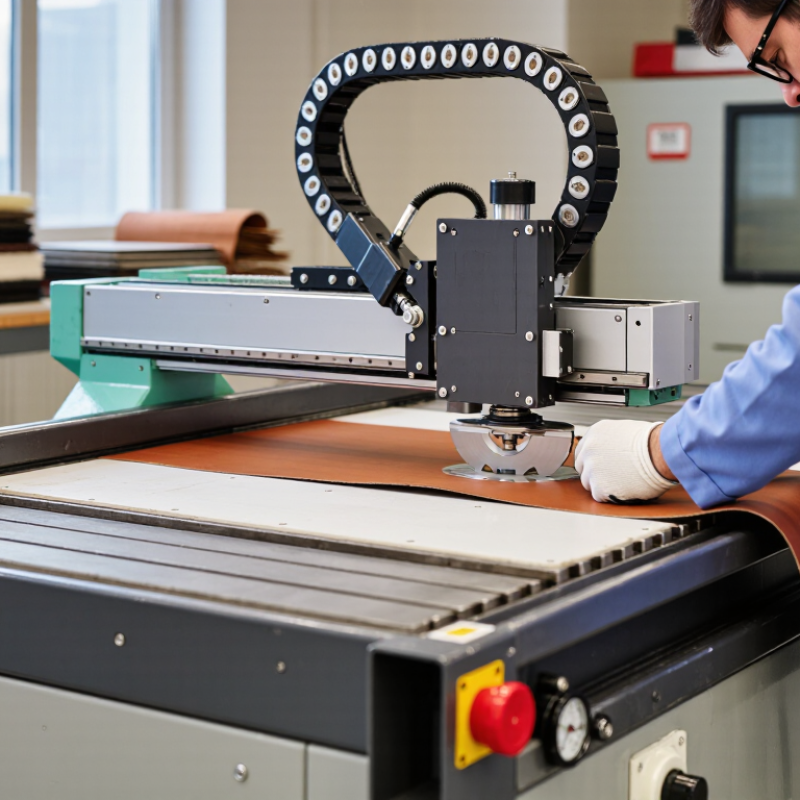
Definition and Basic Structure of a Swing Arm Cutting Machine
A swing arm cutting machine is a mechanical press used to cut shaped materials with a die. Its defining feature is the pivoting swing arm. The arm moves the cutting head downward, applying force to a selected area of the material. Unlike a full-bed cutting system, it does not press every section at once. This makes it suitable for smaller parts, careful positioning, and varied production work.
The basic structure includes a rigid frame, worktable, swing arm, cutting head, drive system, and control panel. The worktable supports materials such as leather, rubber, foam, or layered fabric. A cutting die sits above the material, while the head carries the pressure plate. Depending on the design, hydraulic, pneumatic, or mechanical power moves the arm. Operators normally adjust the stroke, pressure, and arm position before cutting.
In practical workshop checks, alignment matters more than many new users expect. A slightly uneven die can leave incomplete edges or compress one side more heavily. It happens. The operator should inspect the table, fasteners, guards, and emergency controls before operation. Material thickness also affects pressure settings and cutting accuracy. A machine that appears powerful may still produce poor results when the die is blunt or the stack is too high. This is where experience becomes useful: steady setup, moderate pressure, and regular maintenance usually matter more than speed.
Main Components and Their Functions
What Is a Swing Arm Cutting Machine and How Does It Work?
A swing arm cutting machine uses a pivoting head to press a cutting die through stacked material. Its main components are simple but carefully matched. The steel frame supports repeated force without noticeable movement. The hydraulic cylinder drives the swing arm downward. A pressure plate transfers force evenly onto the die. The cutting table supports leather, foam, rubber, textiles, or composite sheets. A foot pedal or two-hand control starts the cutting cycle.
The control system manages pressure, stroke height, and dwell time. Sensors check the arm position and help prevent incomplete cuts. In practical use, an operator places a shaped die over the material, aligns the edge, then activates the press. The arm swings across the table and returns after cutting. Small adjustments matter. Too much pressure can crush foam edges or mark delicate leather.
Industry demand explains this machine’s continuing role. Smithers’ 2024 nonwovens outlook forecasts the global market will exceed 70 billion dollars by 2028, increasing pressure for efficient material processing. A 2024 report from Grand View Research also identifies automation and waste reduction as major trends in cutting equipment. These machines can reduce manual trimming, but the result depends heavily on die sharpness and material stacking. That is often overlooked. Operators still need experience, because uneven layers can create clean-looking cuts with hidden dimensional errors.
How the Swing Arm Cutting Process Works
A swing arm cutting machine uses a hinged cutting head to apply focused pressure to sheet materials. The operator places foam, leather, rubber, or textile layers on a cutting table. A die is positioned above the material. When the arm descends, its blade presses through the stack and follows the die’s shape.
The process is mechanical, but accurate setup matters more than brute force. The machine should be adjusted for material thickness, density, and die height. Excessive pressure can damage the cutting board or compress soft foam. Insufficient pressure leaves incomplete edges. According to World Footwear’s 2024 Yearbook, global footwear production reached about 23.9 billion pairs in 2023. That volume explains the continuing need for repeatable cutting operations. Textile Exchange reported global fiber production at roughly 124 million tonnes in 2023, showing the wider scale of material preparation. Still, output figures do not guarantee quality. A rushed setup can waste valuable material.
Tips: Keep the cutting surface level. Check blade sharpness before production. Use a test cut on scrap material. Measure the first pieces with a ruler or caliper. Operators should also follow ISO 12100 risk-assessment principles and keep hands outside the cutting zone. Small alignment errors matter. I have found that a perfect-looking first cut can hide uneven pressure across the arm. Recheck the far edge.
Materials and Industries That Use Swing Arm Cutters
A swing arm cutting machine uses a pivoting arm to press a cutting die through sheet materials. The operator places the material on a cutting table, positions the die, and activates the arm. Hydraulic or pneumatic pressure then creates a clean, repeatable cut. This method suits EVA foam, polyurethane, rubber, leather, felt, textiles, cork, and thin plastic sheets.
Its applications reflect several large manufacturing markets. World Footwear’s 2024 Yearbook reported approximately 23.9 billion pairs of shoes were produced globally in 2023. Footwear factories use swing arm cutters for insoles, uppers, straps, and foam components. Textile Exchange’s Materials Market Report 2024 recorded global fiber production at about 124 million tonnes in 2023. That volume supports demand from upholstery, protective equipment, luggage, and technical textile producers. Automotive suppliers also cut rubber seals, interior padding, and insulation. Packaging converters may use them for prototypes and short runs. Still, these figures describe material demand, not machine demand. That distinction deserves attention.
Tips: Select the die according to material thickness and hardness. Use a sharp, properly aligned die for cleaner edges. Adjust pressure gradually, especially with delicate foam or leather. Keep hands outside the cutting zone, and inspect the material after several test cuts. In practice, operators often improve accuracy by measuring compression, not merely increasing pressure.
Key Benefits, Limitations, and Safety Considerations
A swing arm cutting machine uses a pivoting arm to press a shaped die through sheet material. The arm moves across a controlled arc, while hydraulic or pneumatic force drives the cutting stroke. Operators place leather, foam, rubber, or textiles on a firm cutting table. Pressure then follows the die’s outline. This produces repeatable parts with clean edges.
Its main benefits are speed, consistent pressure, and efficient batch production. It can reduce manual trimming and material waste when layouts are planned carefully. However, the machine is not equally suitable for every thickness or material. Hard, layered, or poorly supported stock may cut unevenly. Die changes take time, and blunt tooling can damage edges. A small alignment error can waste a full sheet. That weakness is easy to underestimate.
Safety depends on trained operation, intact guards, reliable two-hand controls, and a clear work area. Keep hands outside the point of operation. Disconnect and isolate power before maintenance.
Tips:
Check the die, table, and emergency stop before each shift. Use suitable eye and hearing protection when site conditions require it. Keep loose sleeves and jewelry away from moving parts. Record unusual vibration or pressure changes. Stop the machine and investigate; guessing can turn a minor fault into an injury.



 Wechat: ANNIELV88