How to Choose the Right Fabric Coating Laminating Line for Your Business?
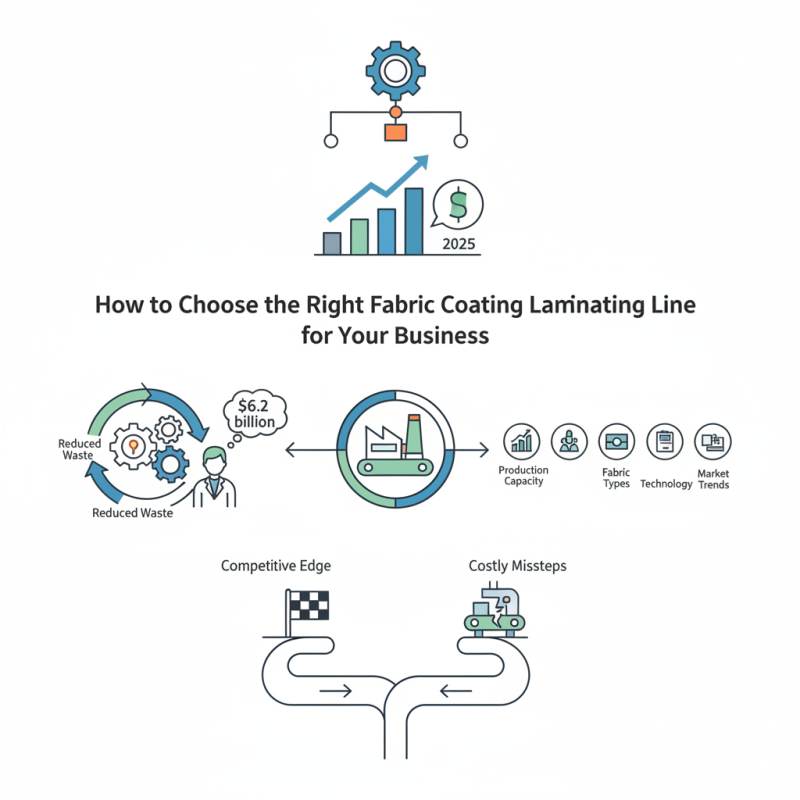
Choosing the right Fabric Coating Laminating Line is crucial for any textile business aiming to excel in today’s competitive market. According to a recent report by Smithers Pira, the global market for fabric laminating is expected to reach $6.2 billion by 2025, reflecting a growing demand for high-quality, versatile products. This highlights the importance of selecting the suitable equipment to meet emerging industry trends and consumer preferences.
Expert in the field, Dr. Emily Tran, states, "Investing in the right Fabric Coating Laminating Line can significantly enhance product quality and reduce waste." This insight reflects a wider recognition of the critical role that advanced coating and laminating technologies play in manufacturing efficiency. Companies must evaluate their specific needs, from production capacity to the types of fabrics processed.
Choosing equipment without thorough research can lead to costly missteps. Different laminating technologies suit various applications and fabric types. Understanding these technologies is essential to avoid overinvestment or underperformance. As the industry evolves, businesses that prioritize proper equipment selection will likely gain a competitive edge.
Understanding the Different Types of Fabric Coating Laminating Lines
Choosing the right fabric coating laminating line is crucial for efficiency. There are various types of laminating lines, each designed for specific applications. Understanding these differences helps businesses enhance productivity.
For instance, a hot melt laminating line uses melted adhesive for bonding. This creates a strong, durable bond. It's ideal for products needing heavy-duty performance. On the other hand, a water-based laminating line uses adhesives that are eco-friendly. This option is preferred for businesses focused on sustainability.
Some lines have specialized features like multi-layer capabilities or quick changeover systems. However, these advanced options can be more complex to operate. It’s essential to weigh the benefits against potential training needs for staff. Not all businesses require the latest technology. Sometimes, a simpler, less expensive option is a better fit.
Comparison of Different Types of Fabric Coating Laminating Lines
Evaluating Your Production Needs and Business Goals
Evaluating your production needs is crucial when choosing a fabric coating laminating line. Begin by assessing your current production capacity. Determine how many units you produce weekly. This will help you identify whether your existing setup has room for growth. Consider the types of fabrics you plan to coat. Different materials require specific treatments, leading to equipment variations.
Your business goals play a vital role in this process. Establish whether you aim for higher efficiency, reduced waste, or product diversification. Tailoring your equipment choice to align with these objectives ensures better outcomes.
Moreover, reflect on your budget and long-term vision. Investing in advanced technology might yield savings in the long run. However, it involves upfront costs. Evaluate your team’s skill set. Are they equipped to handle complex machinery? Balancing these factors ensures that you choose a laminating line that not only fits your needs but also propels your business forward.
Assessing Fabric Types and Their Coating Requirements
When choosing a fabric coating laminating line, understanding fabric types and their coating requirements is crucial. Different fabrics, like cotton and polyester, react uniquely to various coatings. For instance, cotton often requires a breathable coating. Conversely, polyester can handle thicker, more water-resistant applications. Recognizing these differences helps businesses avoid costly mistakes.
Tips to consider: Always request material samples from your supplier. Test these with your proposed coatings. This will reveal compatibility and performance. Additionally, consider the end-use of the fabric. Is it for outdoor applications or indoor furnishings? This can significantly influence your coating choice.
Another essential factor is the fabric's weight and texture. Lightweight fabrics may need lighter coatings to maintain flexibility. Textured fabrics can complicate coating processes. Take time to assess how your chosen coating will interact with the fabric surface. Reflect on potential equipment adjustments too. Sometimes, a simpler line may suffice for specific projects. Understanding these elements helps in selecting a suitable laminating line for your business.
How to Choose the Right Fabric Coating Laminating Line for Your Business? - Assessing Fabric Types and Their Coating Requirements
| Fabric Type |
Common Uses |
Coating Requirements |
Recommended Laminating Line |
| Polyester |
Outdoor fabrics, clothing |
Waterproof, UV resistant |
Heat laminating line with specific temperature controls |
| Nylon |
Luggage, tents, outdoor gear |
Durability, abrasion resistance |
Hot melt laminating line with precision coating |
| Cotton |
Apparel, home textiles |
Breathability, eco-friendly coatings |
Low-temperature laminating line for sensitive fabrics |
| Vinyl |
Signage, inflatable products |
Waterproof, chemical resistance |
Pressure-sensitive laminating line |
| Leather |
Luxury goods, upholstery |
Flexibility, natural finishes |
Cold laminating line for delicate applications |
Comparing Cost, Efficiency, and Technology Features
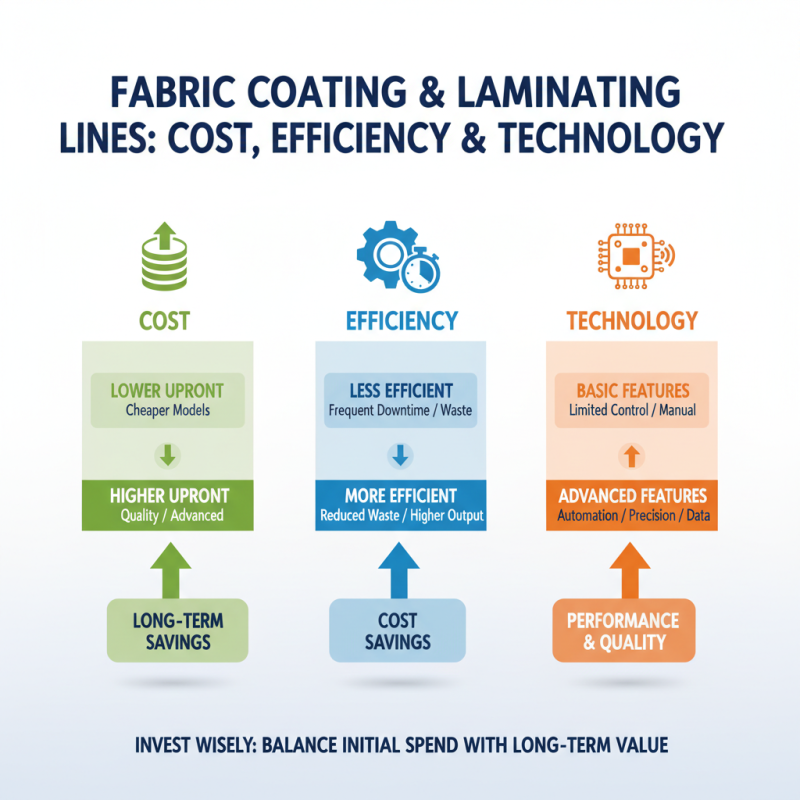
When selecting a fabric coating laminating line, cost, efficiency, and technology are crucial factors. The initial investment varies by model. While cheaper options may seem attractive, they often lack durability and advanced features. A high-quality line may have a higher upfront cost but can save money in the long term through efficiency.
Efficiency is not just about speed. Look for features that minimize downtime and reduce waste. For instance, calls for process adjustments may arise. A versatile line can adapt to different materials and thicknesses. This flexibility can enhance production without having to switch equipment frequently.
Technology features often dictate the line's usability. Advanced systems offer better control over temperature and pressure. This precision impacts the final product's quality. However, high-tech solutions may require staff training. Ensuring your team can operate and maintain the equipment is vital. Balancing cutting-edge technology with user-friendliness is essential. Investing in the right combination will benefit your business in various ways, despite potential growing pains.



 Wechat: ANNIELV88