Best Die Cutting Machines for Efficient Production Solutions?
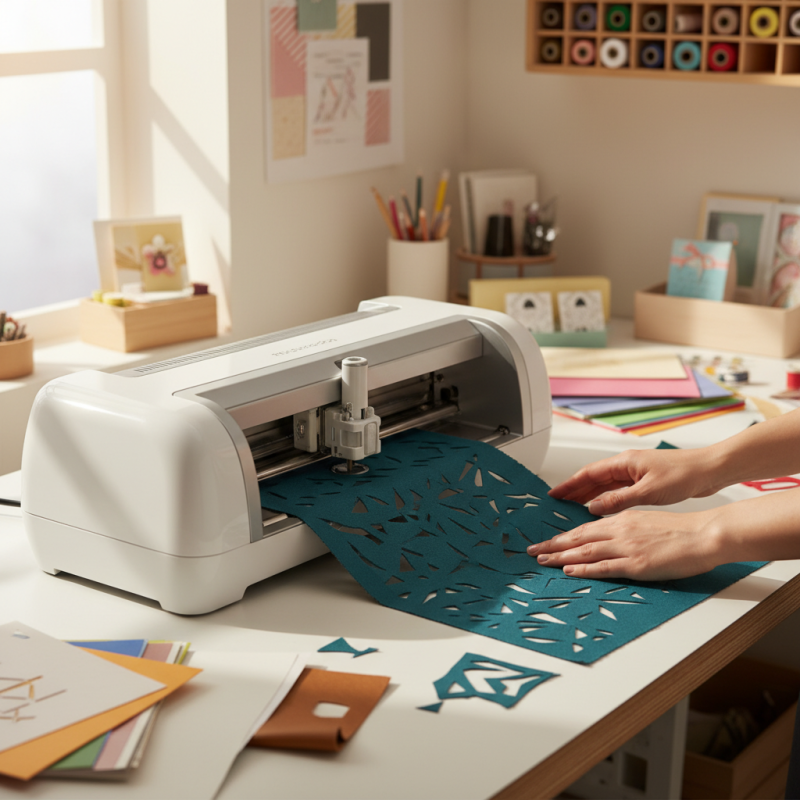
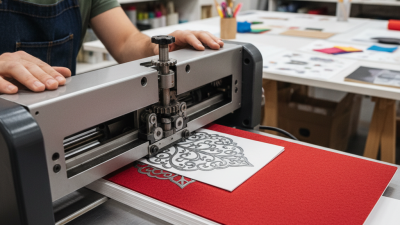
In the realm of crafting and production, a Die Cutting Machine stands as an essential tool. These machines offer precision and efficiency, allowing users to cut various materials with ease. Whether for paper crafting, fabric design, or packaging, the right die cutting machine can transform a creative vision into reality.
Selecting a die cutting machine requires careful consideration. Features such as size, cutting capabilities, and ease of use play a crucial role. Many machines cater to different skill levels, from beginners to professionals. It's important to identify which model aligns with your specific needs.
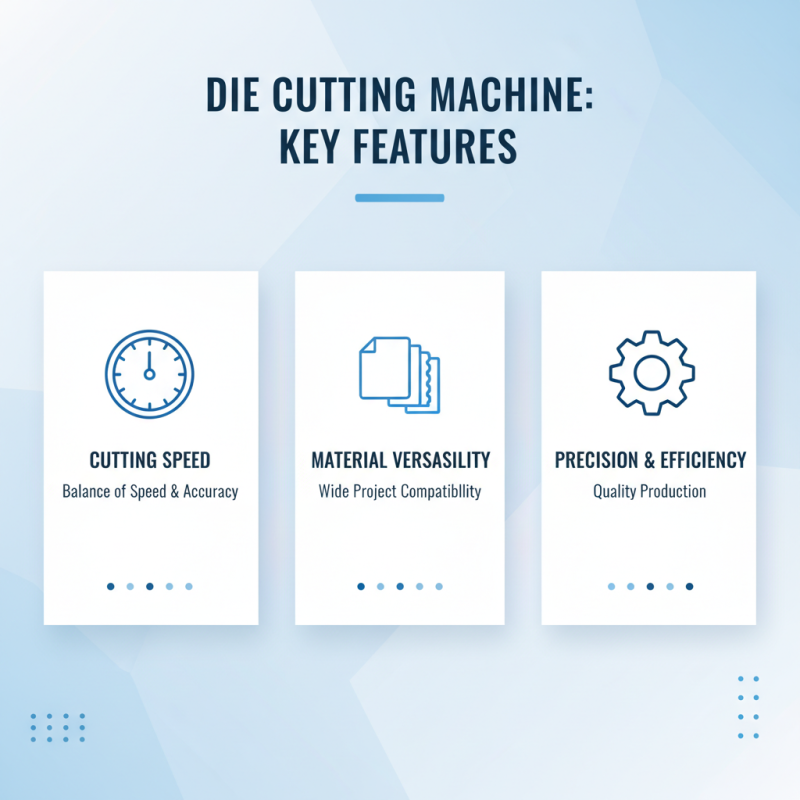
Many users praise the speed and consistency of modern die cutting machines. However, some machines may come with a steep learning curve. Finding a balance between functionality and user-friendliness can be challenging. Investing in a quality die cutting machine can elevate your production process, but it’s vital to recognize that not every machine is perfect for every project. Thus, thoughtful evaluation is key to making the best choice.
Types of Die Cutting Machines and Their Applications
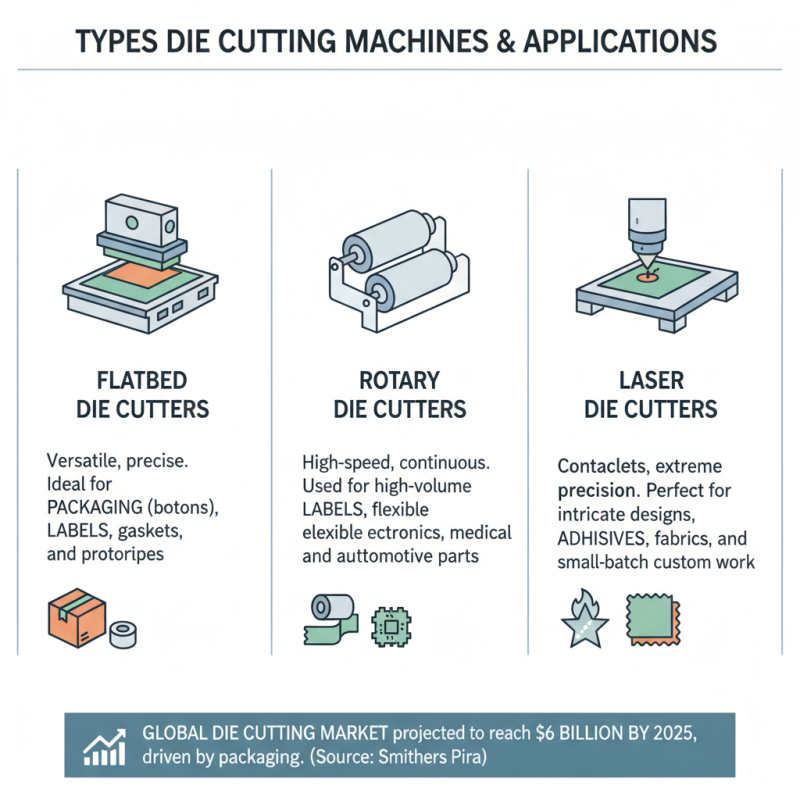
Die cutting machines come in various types, each suited for specific applications. The most common types are flatbed, rotary, and laser die cutting machines. Flatbed die cutters are versatile and widely used in packaging and label production. According to a report by Smithers Pira, the global die cutting market is projected to reach $6 billion by 2025, driven by demand in the packaging sector.
Rotary die cutters often cater to high-volume operations. They excel at producing intricate designs and can handle a range of materials. Industries such as textiles and automotive benefit significantly from these machines. Interestingly, laser die cutting is gaining traction due to its precision and low waste. This technology is ideal for complex shapes, making it popular in electronics and custom crafts.
Tips: Choosing the right machine hinges on your production needs. Assess material compatibility and desired output. A well-versed operator is vital for maximizing efficiency and minimizing errors. Regular maintenance is crucial as well. It ensures optimal performance and longevity. Staying updated on industry trends can provide insights for your investment decisions.
Comparative Analysis of Top Die Cutting Machines in the Market
Die cutting machines are crucial for industries requiring precision and efficiency. A recent market analysis shows a significant growth trend in this sector, with an expected CAGR of 5.2% until 2025. This growth is fueled by the rising demand for custom packaging solutions in e-commerce, which emphasizes the need for adaptability in production processes.
When comparing top die cutting machines, factors like speed, accuracy, and material versatility play key roles. Machines that operate at speeds exceeding 100 units per minute allow for higher production rates. However, the trade-off may be in precision, as some high-speed machines face challenges in maintaining accuracy with complex shapes. Furthermore, many operators report issues with material jams and inconsistent cut quality, highlighting areas for improvement in design and engineering.
User feedback indicates that the choice of die cutting technology often hinges on the specific applications. For instance, digital die cutting machines provide flexibility and customization but may require more training for operators. While they offer advanced capabilities, some users struggle with software compatibility and setup time. These nuances can greatly affect production outcomes.
Best Die Cutting Machines for Efficient Production Solutions
| Model |
Cutting Area |
Speed (cuts/min) |
Accuracy (mm) |
Price ($) |
| Machine A |
12" x 12" |
20 |
0.1 |
350 |
| Machine B |
18" x 24" |
25 |
0.05 |
650 |
| Machine C |
15" x 15" |
18 |
0.08 |
450 |
| Machine D |
24" x 36" |
30 |
0.03 |
900 |
Tips for Maintaining and Operating Die Cutting Machines Efficiently
Maintaining and operating die cutting machines efficiently is crucial for maximizing productivity. According to a report by Smithers Pira, effective maintenance can improve machine lifespan by up to 30%. Regular checks and timely repairs prevent costly downtimes. It's essential to schedule routine inspections, focusing on blades and rollers. Replace any worn components to ensure optimal performance.
Tips for Maintenance: Regularly clean the components to avoid dust buildup. Lubricate moving parts to reduce friction. Check the calibration frequently for precise cuts. Each small detail matters; even the tiniest misalignment can lead to wastage or errors in production. The industry standard suggests that about 15% of materials can be wasted due to inefficient operations.
Operating these machines requires expertise. Operators should receive proper training to handle various materials. Familiarity with machine settings is vital, as different substrates require different pressures and speeds. A lack of knowledge can lead to mistakes and negatively impact the production process, highlighting the importance of skilled labor in this field. Taking time to ensure correct operation can minimize errors and improve outcomes.
Innovations in Die Cutting Technology for Enhanced Production Solutions
Die cutting technology is rapidly evolving. Recent reports show that the global die cutting machine market is expected to grow at a CAGR of 4.9% from 2021 to 2028. This growth signals a shift toward more efficient production solutions in various industries. Innovations such as automated systems and advanced software are transforming traditional die cutting methods. These developments enhance precision and reduce waste, which are critical for productive operations.
Rapid prototyping and digital die cutting are gaining traction. The integration of these technologies allows businesses to create complex designs with shorter lead times. A survey by Smithers Pira highlights that 78% of manufacturers noted improved efficiency after adopting advanced die cutting machines. Yet, challenges remain. Owners must often balance investment costs with production demands. Adopting new technologies requires training and adaptation. These factors can slow down the overall progress in some cases.
Incorporating industry-specific materials is also important. Many users find that not all materials perform equally well with new machines. The choice of dies and substrates can affect the outcome significantly. With that in mind, manufacturers must carefully evaluate their materials to align with the benefits of new die cutting technologies.




 Wechat: ANNIELV88