Choosing the 2026 Best UD Crossply Machine requires more than comparing purchase prices.
Global buyers need stable fiber placement, accurate resin handling, dependable tension control, and repeatable cross-ply angles. Small deviations can create wrinkles, uneven thickness, or rejected laminates. Those defects become costly when aerospace, wind-energy, or automotive programs reach volume production.
The MarketsandMarkets Composites Market report estimates global composites demand will grow from about USD 111.6 billion in 2024 to approximately USD 171 billion by 2029. Grand View Research also identifies carbon fiber as a strong-growth material segment through 2030. These figures support continued investment in automated manufacturing equipment. However, market growth does not guarantee every machine will suit every factory.
Professor Stephen W. Tsai, a widely recognized composites researcher, has emphasized that “the properties of composites depend on the process as much as on the material.” His point matters here. A high-speed Ud Crossply Machine may look impressive, but speed alone cannot replace alignment accuracy, software control, operator training, or service access.
The best machine is application-specific.
This guide compares practical factors for global buyers, including layup width, production speed, ply-angle accuracy, material compatibility, heating systems, inspection functions, and after-sales support. It also considers installation realities, such as floor space, power quality, spare parts, and technical language barriers. These details are easy to overlook.
A faster line is not always better. Sometimes, a simpler machine delivers fewer interruptions and lower lifetime costs. That judgment requires evidence, not attractive specifications.
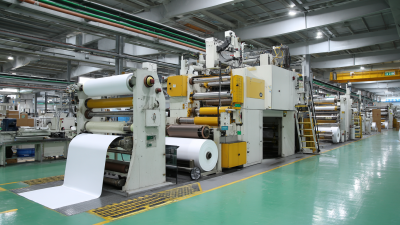
A UD crossply machine converts unidirectional reinforcement into layered composite sheets. UD tapes contain fibers running mainly in one direction. The machine unwinds, aligns, cuts, and places these tapes at selected angles. Common layouts include 0°/90° and ±45° layers. Heated rollers or a consolidation press then bond the stack under controlled pressure.
Operators monitor web tension, fiber angle, overlap, temperature, and line speed. Small errors can create wrinkles or weak zones. The finished laminate may be supplied as rolls, flat sheets, or cut blanks. Some systems process thermoplastic tapes, while others handle dry fiber for later resin infusion. The difference matters during machine selection.
Grand View Research reported that the global composites market was valued at about USD 86.6 billion in 2023, with continued growth expected through 2030. MarketsandMarkets also identifies transportation and wind energy as important composite demand sectors. These figures support investment interest, but they do not guarantee one machine will suit every factory. Published throughput can be difficult to compare. It may exclude material changes, cleaning, and reject handling. A practical trial should measure real layup accuracy, scrap rate, energy use, and operator workload. That is where specifications become useful.
A reliable UD crossply machine should match your actual laminate schedule, not only its advertised speed. Check working width, ply angle range, tension control, and cutting accuracy. A practical target is angle accuracy near ±1°, with stable fiber tension across the full roll. Line speed also needs context. Carbon fiber, glass fiber, and high-temperature tapes behave differently. Faster is not always better.
MarketsandMarkets estimates the global composites market will grow at about 7% annually through 2030, increasing pressure on automated production. The 2024 JEC Observer also identifies automation, traceability, and material efficiency as major manufacturing priorities. For 2026 purchasing, request measured output data, not promotional peaks. Confirm whether quoted speed includes cutting, overlap, roll changes, and inspection. Those details can change real productivity sharply. I have seen impressive trial results weaken during long shifts.
Tips: Test your widest and narrowest products. Measure tension variation, edge alignment, scrap rate, and changeover time. Ask for production samples under normal factory conditions. A useful machine should support 0°, 90°, and ±45° layouts, while recording batch data and operator settings. Heated rollers, controlled compaction, and automatic defect detection may improve consistency. However, advanced features add maintenance needs. Plan spare parts, training, and local technical support before signing.
Global production places practical demands on a UD crossply machine. Stable web tension is essential when laying unidirectional tapes at 0°, 90°, or ±45° angles. Even minor tension changes can create wrinkles, gaps, or uneven laminate thickness.
A reliable machine should support adjustable working widths and multiple material formats. Servo-driven positioning helps maintain accurate ply angles during continuous production. Automatic edge alignment reduces waste near the roll sides. Operators also need clear controls, quick recipe changes, and real-time alarms. These features matter when factories produce different structures across several shifts.
Check the heating system carefully. Uniform temperature improves bonding, especially with sensitive thermoplastic tapes. Cooling control also affects final flatness and handling strength. Energy monitoring can reveal hidden operating costs. Safety guards, emergency stops, and documented maintenance procedures support responsible factory use. Global buyers should confirm voltage compatibility, language options, spare-part availability, and remote technical support before ordering.
Field experience shows that higher speed does not always mean better output. A fast line may increase defects when tension or temperature drifts. No machine is perfect. Buyers should request trial data using their own materials, widths, and target angles. Production records should include speed, tension, temperature, downtime, and reject rates. Those details support a more reliable investment decision, although some performance differences may only appear after long-term operation.
These engineering planning benchmarks compare three common production scales. A global-ready UD crossply machine typically requires flexible working widths, stable line speeds, and sufficient capacity for continuous industrial output. Actual specifications should be verified against the required fabric type, reinforcement material, resin system, and plant conditions.
For global buyers, the best UD crossply machine in 2026 is not simply the fastest model. Installation, operation, and maintenance determine its real value.
The Global Wind Energy Council reported 117 GW of new wind capacity in 2023. The IEA’s Renewables 2024 report expects about 5,500 GW of renewable capacity additions from 2024 to 2030. These figures suggest stronger demand for stable composite production.
Installation needs a level foundation, controlled humidity, and enough service clearance. Confirm electrical standards before shipment.
During commissioning, technicians should measure web tension across the full working width. Small tension differences can create wrinkles near the cross-lap point. They can also weaken final laminates.
We learned this the hard way.
Daily operation should record temperature, tension, cutting accuracy, and material waste. A simple log often reveals problems earlier than an alarm.
Maintenance teams should inspect rollers, blades, sensors, and pneumatic lines each shift. Lubrication intervals must follow actual dust exposure, not only the manual.
High-throughput lines need spare sensors and cutting components on site.
However, excessive preventive replacement can waste money. The better approach combines manufacturer guidance, production data, and operator experience.
A perfect uptime claim deserves skepticism. Accept some uncertainty. Recheck calibration after material changes, long shutdowns, or relocation.
2026 Best UD Crossply Machine for Global Buyers?
Global purchasing starts with the material, not the sales brochure. A UD crossply machine should handle the required fiber width, ply angle, tension range, and production speed. Ask for verified test data using your actual carbon, glass, or aramid fiber. A factory trial is valuable. Photos are not enough.
Compliance documents must match the destination country and machine configuration. Request electrical safety files, electromagnetic compatibility evidence, risk assessments, and clear operating manuals. Check whether certificates cover the complete machine, not only selected components. Confirm voltage, frequency, guarding, emergency stops, and noise data before signing. Import codes and customs documents also need careful review. Requirements differ between markets.
Supplier evaluation should include a factory audit, reference calls, and a written acceptance test. Inspect frame alignment, winding quality, control-system access, and spare-parts availability. Ask how quickly engineers respond across time zones. I have seen attractive quotations hide expensive installation delays. A detailed warranty helps, but response capability matters more. Request training hours, remote support terms, and documented maintenance intervals. It is easy to overvalue line speed. Stable tension may matter more. No checklist catches every risk, and buyer assumptions can remain wrong.
| Evaluation Dimension | Recommended Target for Global Buyers | Typical Market Range or Requirement | Required Verification Evidence | Purchasing Significance |
|---|---|---|---|---|
| Machine Function | Continuous production of unidirectional tape or fabric with cross-ply lamination at selectable angles. | Common configurations support 0°/90° cross-ply; advanced systems may support variable angles such as ±45°. | Process-flow diagram, machine layout, sample rolls, and a witnessed production trial using the buyer’s material. | Confirms that the equipment is a true crossply system rather than a basic tape or fabric handling line. |
| Usable Working Width | Select a width that matches the finished laminate format while allowing edge trim and process tolerance. | Approximately 1,600–3,200 mm for many industrial applications; custom widths may be available. | Certified dimensional drawing, effective-width measurement, and confirmation of minimum and maximum web widths. | Oversizing increases capital and floor-space costs; undersizing can restrict product formats. |
| Production Speed | Prioritize stable output at the required material specification rather than maximum empty-line speed. | Typical operating speeds are approximately 20–80 m/min, depending on reinforcement, resin system, width, and ply angle. | Factory acceptance test showing sustained speed, output quality, stoppage rate, and changeover time. | Actual throughput determines payback more reliably than the supplier’s advertised maximum speed. |
| Areal Weight Capability | The line should cover the buyer’s target areal weight with repeatable fiber distribution. | A practical target range is approximately 100–600 g/m², subject to reinforcement type and process design. | Areal-weight test records from multiple positions across the web and across repeated production runs. | Uniform areal weight reduces downstream resin variation, void risk, and laminate performance deviation. |
| Ply-Angle Accuracy | Control system should maintain the specified angle throughout the roll, including during acceleration and deceleration. | Buyer-defined tolerance commonly falls around ±1° to ±2°, but the final requirement depends on the application. | Calibrated angle-measurement report, sample inspection, and documented control-system settings. | Angle variation directly affects anisotropic strength, stiffness, dimensional stability, and part-to-part consistency. |
| Material Compatibility | Confirm compatibility with the intended fiber, thermoplastic or thermoset matrix, backing film, and adhesive system. | Common reinforcement options include glass, carbon, aramid, and hybrid materials; temperature limits vary by matrix. | Material datasheets, temperature map, tension settings, roller-surface specifications, and trial results. | Incorrect material compatibility can cause fiber damage, poor bonding, wrinkles, or premature equipment wear. |
| Tension Control | Closed-loop tension control with independent adjustment for reinforcement and carrier or release films. | System capability should be specified by material type and width; low-tension control is essential for brittle or delicate fibers. | Tension calibration certificate, trend data, alarm limits, and demonstration with the buyer’s narrowest and widest products. | Stable tension minimizes wrinkles, spreading defects, fiber breakage, and ply misalignment. |
| Lamination and Consolidation | Adjustable nip pressure, temperature, and dwell time with clear process monitoring. | The required temperature and pressure depend on resin chemistry; thermoplastic consolidation generally requires higher controlled heat. | Temperature-uniformity mapping, pressure calibration, nip-gap settings, and laminate-bond test results. | Poor consolidation can create delamination, trapped air, uneven bonding, and weak finished parts. |
| Edge and Width Control | Automatic edge guiding, web-centering, controlled trimming, and stable finished-roll width. | Final width tolerance should be agreed in the technical contract; many applications require millimetre-level repeatability. | Width inspection data, edge-trim specification, guide calibration records, and finished-roll samples. | Accurate width reduces waste and improves compatibility with cutting, winding, and automated lay-up operations. |
| Automation and Data Access | PLC-based control, recipe storage, alarm history, production counters, and exportable process data. | Minimum recommended functions include speed, tension, temperature, pressure, angle, and emergency-stop monitoring. | Control-panel demonstration, input/output list, user-access levels, backup procedure, and software-support terms. | Traceable process data supports quality audits, troubleshooting, and future production scaling. |
| Electrical and Safety Compliance | Supply the machine with documentation and safety design suitable for the destination country. | Typical requirements include risk assessment, guarded moving parts, emergency stops, electrical schematics, and applicable local conformity marking. | Declaration of conformity where applicable, risk assessment, safety-circuit diagram, test records, manuals, and local electrical review. | Compliance gaps can delay customs clearance, installation, insurance approval, or production authorization. |
| Quality Management | Supplier should operate a documented quality system with controlled design, assembly, inspection, and nonconformance procedures. | ISO 9001 certification is a useful baseline, but certification alone does not guarantee machine performance. | Valid certificate scope, internal inspection checklist, calibration records, corrective-action examples, and reference-site evidence. | A mature quality system lowers variation between the approved machine and the delivered machine. |
| Factory Acceptance Test | Use objective acceptance criteria based on the buyer’s materials, product width, speed, angle, and quality limits. | A meaningful FAT should include continuous operation, product inspection, safety checks, alarm testing, and documented deviations. | Signed FAT protocol, test videos, measurement records, punch list, and closure schedule. | FAT converts general marketing claims into measurable contractual delivery conditions. |
| Installation and Commissioning | Require installation supervision, operator training, process qualification, and documented handover. | On-site support commonly ranges from several days to multiple weeks, depending on line complexity and local readiness. | Installation checklist, utility requirements, training agenda, commissioning report, and performance sign-off. | Clear commissioning responsibilities prevent disputes over utilities, operator skills, and production delays. |
| Spare Parts and Service | Secure a critical-spares package, response-time commitment, remote diagnostics, and long-term parts availability. | Recommended coverage includes sensors, belts, bearings, heating elements, cutting components, and control-system backups. | Spare-parts list with prices and lead times, service-level agreement, escalation contacts, and maintenance schedule. | Downtime costs can exceed the original equipment price difference, especially for continuous production. |
| Commercial and Delivery Terms | Use a detailed technical annex, milestone payments, inspection rights, warranty terms, and clearly defined delivery responsibilities. | Compare total landed cost: machine price, tooling, packaging, freight, duties, installation, training, utilities, and spare parts. | Signed specification, payment schedule, delivery timeline, warranty exclusions, packing list, and shipping documentation. | A transparent contract reduces total-cost surprises and provides remedies when agreed performance is not achieved. |